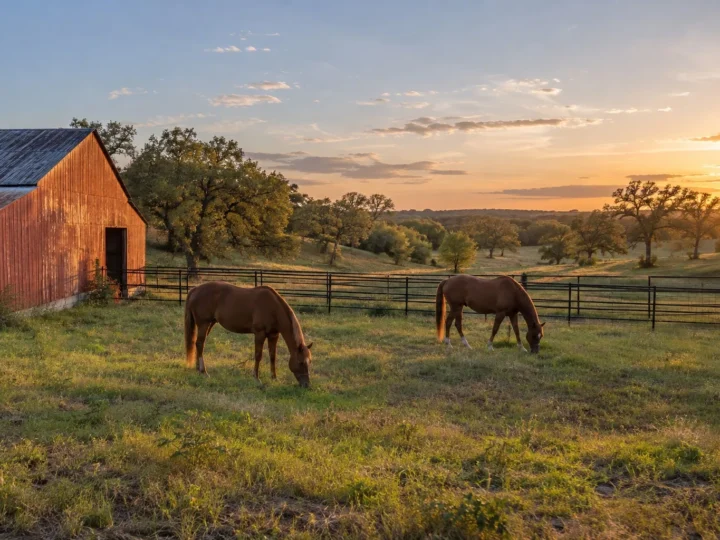
Fannin County is one of the most popular places in North Texas to buy land. You can still find open pasture, creek-bottom woods and county-road homesites within about an hour and a half of Dallas, and new projects like Lake Bois d’Arc are drawing even more attention to the area.
But two tracts that look identical on a listing can be completely different once you look closer. Here is the checklist I use with every Fannin County land buyer.
1. Is there legal access?
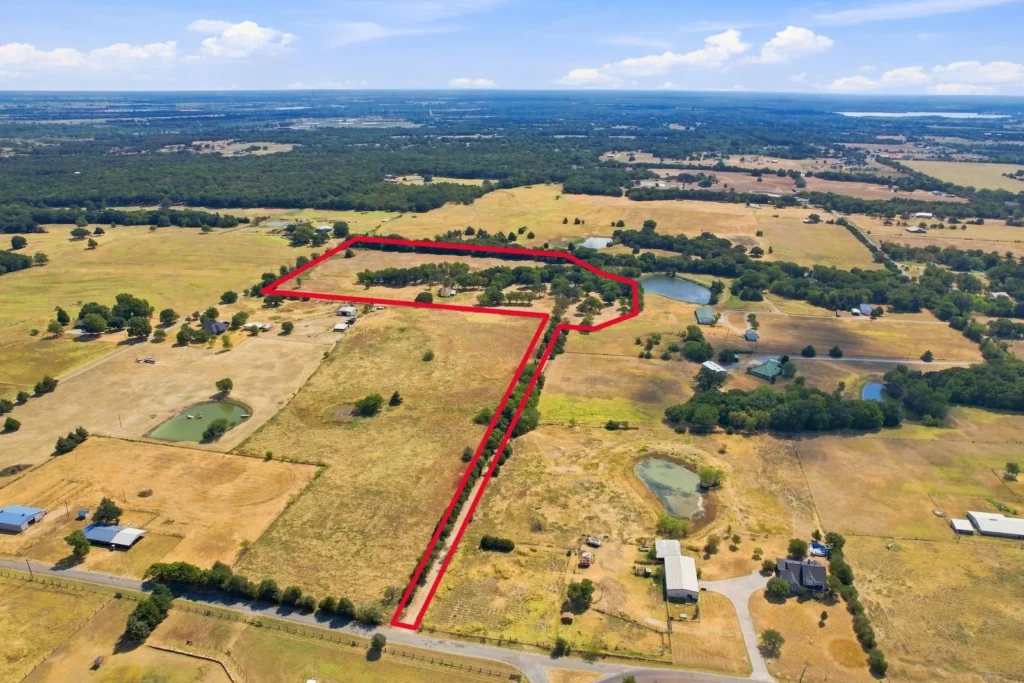
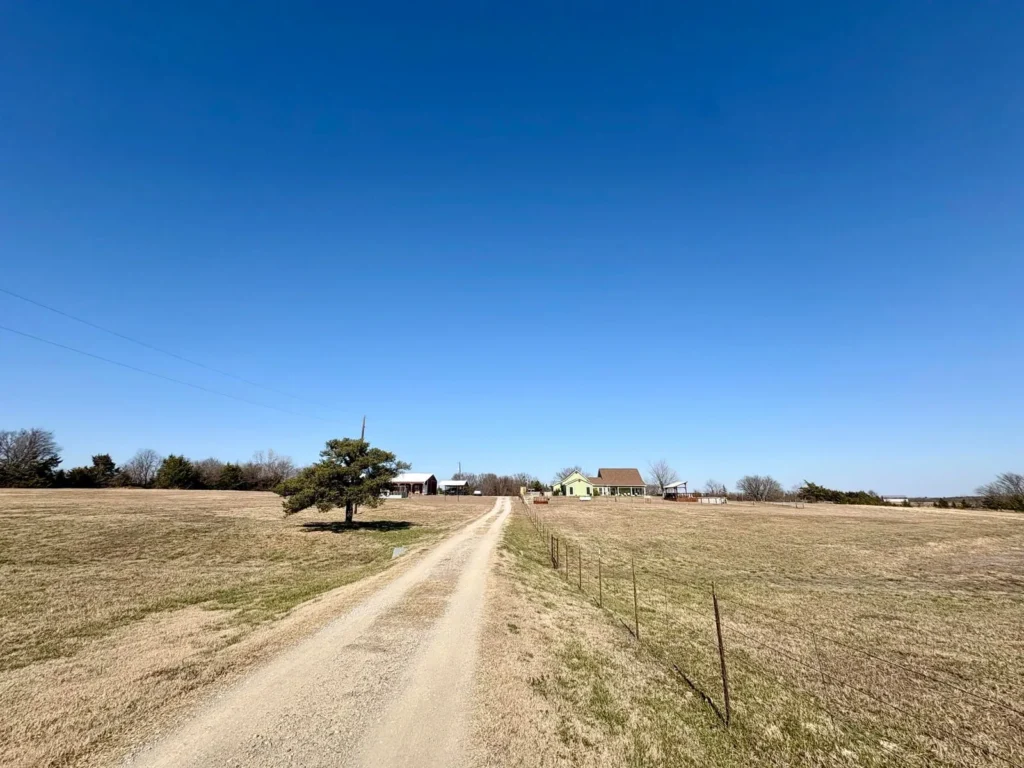
Road frontage on a county road or state highway is the simplest. If the tract is reached by a private road or through a neighbor’s property, you need a recorded easement — not just a gate that “everyone has always used.” Lenders and title companies will ask about it, and so will future buyers.
2. Where will your water come from?
Much of rural Fannin County is served by rural water supply corporations. Ask whether a meter is already on the property, whether the water company has capacity, and what a new tap costs. If you plan to drill a well, talk to local well drillers about typical depth and water quality in that area.
3. Will the land support a septic system?
Without city sewer, you will need an on-site sewage facility (OSSF), permitted under the TCEQ’s septic rules. Soil type, slope and lot size determine what kind of system is allowed. A site evaluation before closing can prevent a costly surprise.
4. How much is in the floodplain?
Creeks are a big part of the beauty here, but check the FEMA flood maps and walk the low areas after a rain if you can. A tract that is mostly floodplain may be great for grazing and hunting but limit where you can build.
5. What restrictions apply?
Deed restrictions can limit home size, mobile homes, animals or subdividing. Property near a city may also fall inside its extraterritorial jurisdiction (ETJ). Always read the restrictions before you write an offer.
6. Do the mineral rights convey?
In Texas, minerals are often severed from the surface. It doesn’t make a tract a bad buy, but you should know what you are — and aren’t — purchasing.
7. What is the tax status?
Many larger tracts carry an agricultural valuation that keeps property taxes low. If you change how the land is used, rollback taxes may apply. Ask the seller how the land qualifies today and whether you plan to keep it in agricultural use.
8. How will you finance it?
Land loans usually need a larger down payment than a home loan. Lenders that specialize in rural property, including Farm Credit associations, are often the best fit. Get pre-qualified before you fall in love with a tract.
How I walk a Fannin County tract with you
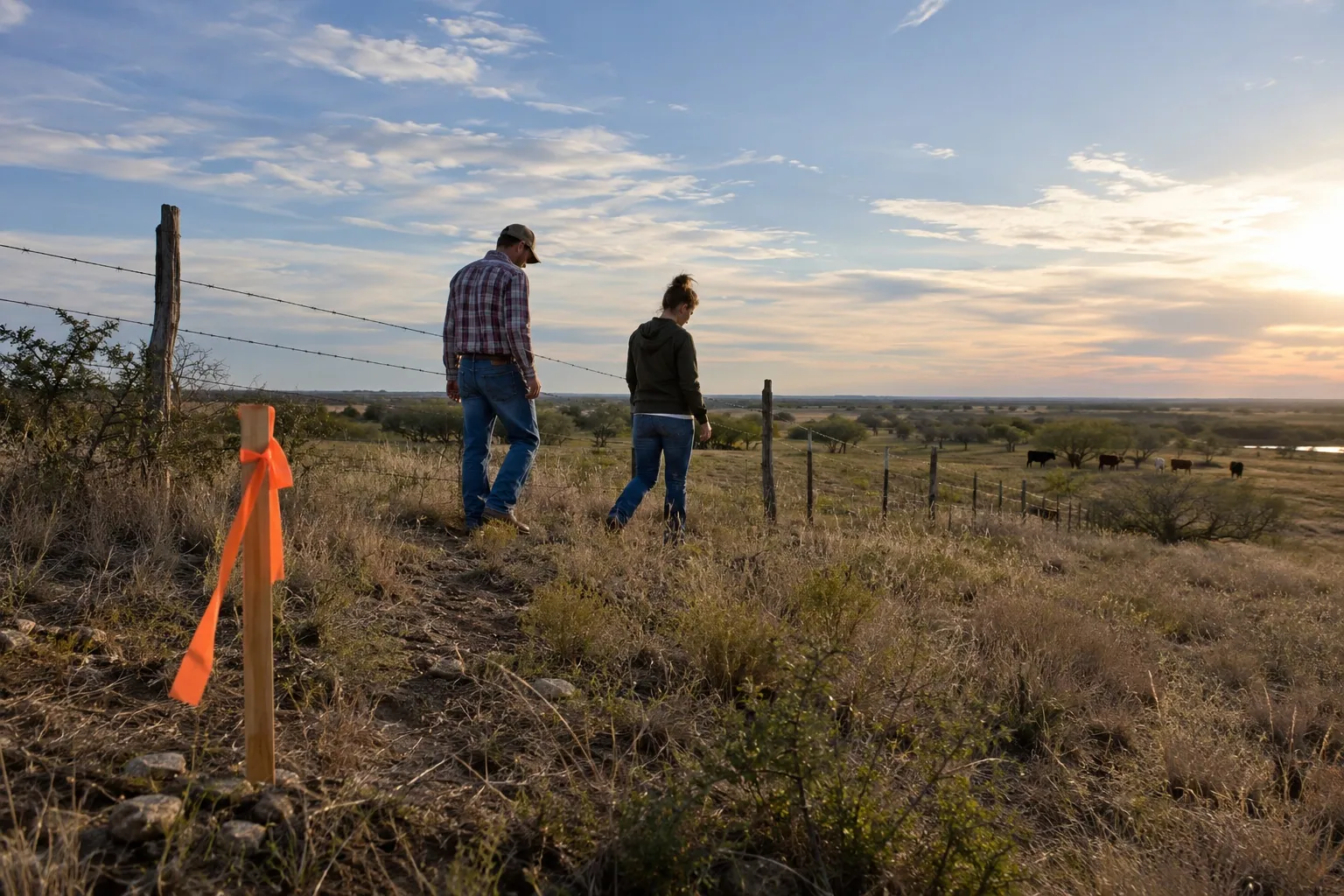
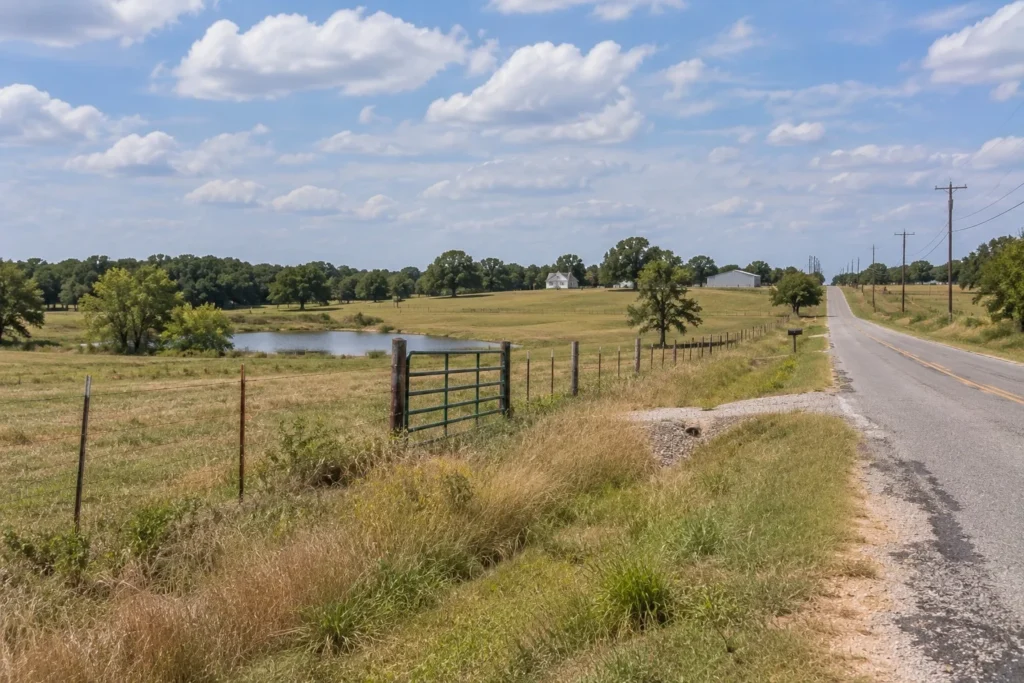
Before you write an offer, I like to walk the land with you. We drive the road frontage, look at the fence lines and the low spots, find the water meter or the nearest water line, and talk about where a house, a shop or a pond could go.
Then I pull the survey, the plat if there is one, the deed restrictions and the Fannin County appraisal district record, so we know exactly what you are buying. For land near Lake Bois d’Arc, I also check what the North Texas Municipal Water District has published about the lake and its shoreline.
Fannin County land still offers some of the best value within reach of DFW, but the right tract is the one that fits your plans. If you want to build within a year, access, water and septic matter most. If you want to run cattle or hunt, acreage, fencing and the floodplain matter more. Tell me your plans and I’ll filter Fannin County listings with that in mind.
Thinking about land in Fannin County or nearby Grayson, Hunt or Lamar County? Tell me what you want to do with it, and I’ll send you tracts that actually fit — including ones before they hit the big portals. Get in touch →

Shayla Eadler
Native Texan, wife, boy mom and the broker and owner of Ten Twenty Realty — helping North Texas families buy and sell homes, land and ranches since 2020.
Ask me a question