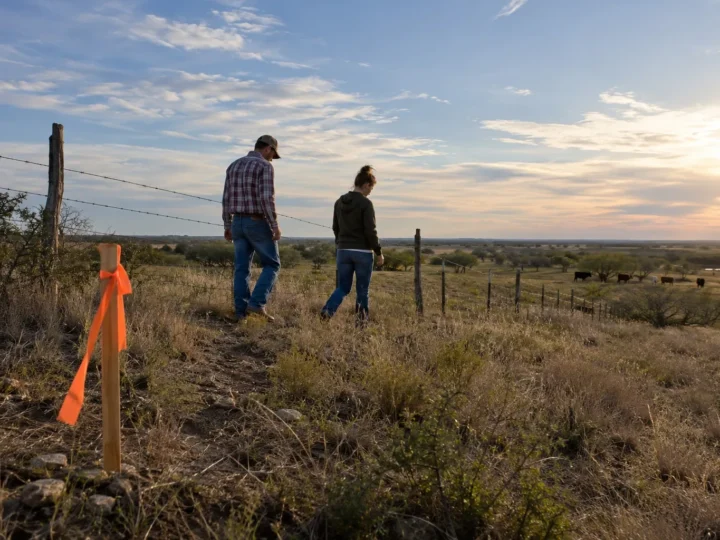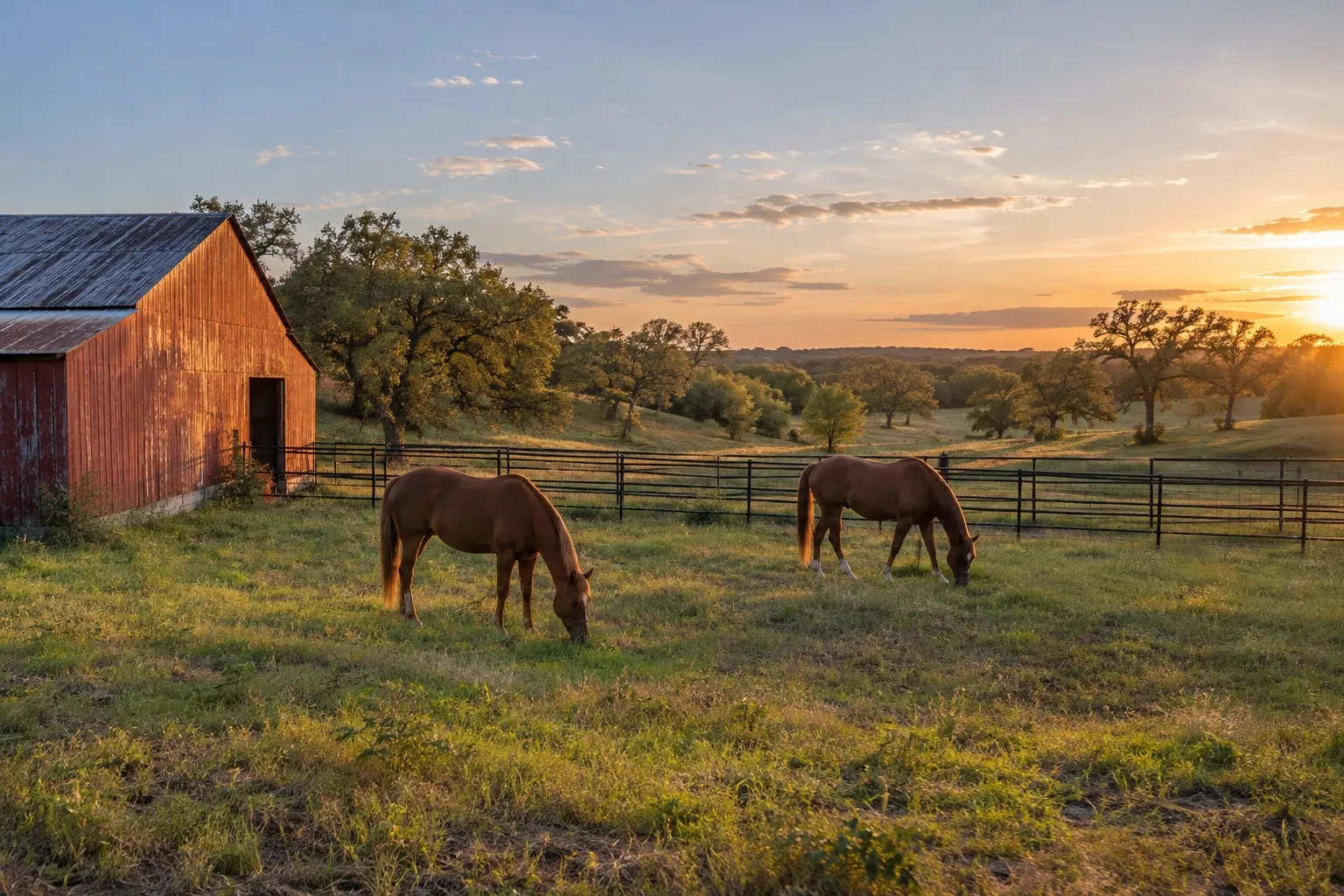
When people say “ag exemption,” they usually mean Texas’ open-space agricultural valuation (often called 1-d-1, explained on the Texas Comptroller’s property tax pages). Instead of taxing the land at market value, the county appraisal district taxes it based on its ability to produce agricultural income — which can lower property taxes dramatically.
In this guide I’ll explain how the ag exemption works, how land qualifies, what it can save and what to ask before you buy.
How land typically qualifies
- The land’s primary use must be agriculture — grazing, hay, crops, beekeeping and similar uses.
- It generally must have been in agricultural use for at least five of the past seven years.
- It must meet the degree-of-intensity standards set by your county appraisal district, which vary by county.
- The owner applies with the county appraisal district.
How much can an ag exemption save?
It depends on the county and the use, but the difference can be large. Land taxed at market value may be appraised at thousands of dollars an acre, while its agricultural value is often a small fraction of that. On a larger tract, that can mean real savings every year. Your county appraisal district publishes its agricultural values, and I’ll help you estimate the tax bill before you buy.
What buyers should ask
Is the land currently valued as agricultural? How does it qualify — cattle, hay, a lease? Will you continue that use? If use changes, rollback taxes for prior years may apply.
Ag exemption and rollback taxes
If land under agricultural valuation changes to a non-agricultural use — you subdivide it or stop running cattle, for example — the appraisal district can charge a rollback tax: the difference between the taxes paid and the taxes due at market value for prior years, plus interest. A homesite on the land is usually taxed at market value even when the rest keeps its ag exemption. Ask about both before you close.

What about wildlife management?
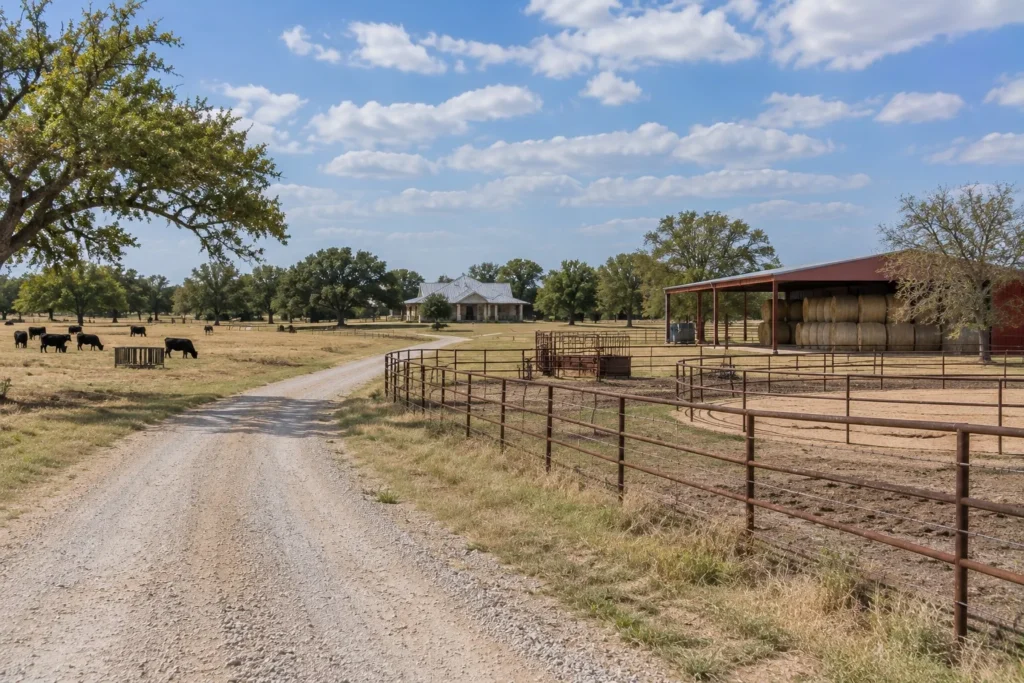
Land that already has agricultural valuation may be able to convert to wildlife management valuation by following an approved wildlife management plan. It is a popular option for recreational owners.
Habitat control, supplemental water and wildlife counts are typical wildlife uses, and they are popular with owners who want to hunt or simply enjoy the land without running cattle. Texas Parks and Wildlife has guidance on writing a plan.
Keeping your ag exemption after you buy
- Apply with the county appraisal district by its deadline — a new owner usually has to file a new application.
- Keep records: grazing leases, hay sales, vet bills and receipts help show the land is in agricultural use.
- If you lease the land to a rancher, put the lease in writing and keep it current.
- Ask the appraisal district about minimum acreage and stocking guidelines before you buy a small tract.

Every county appraisal district has its own rules. I’ll help you confirm a property’s status before you buy. Get in touch →

Shayla Eadler
Native Texan, wife, boy mom and the broker and owner of Ten Twenty Realty — helping North Texas families buy and sell homes, land and ranches since 2020.
Ask me a question